Wingbits Q4 2025 Log: A Year of Validation
Wingbits
January 1, ‘26
Coverage parity with industry incumbents. That's where we finished 2025, but the metric only tells half the story.
While our network solidified its position across key markets, something fundamental shifted: we stopped explaining why our aviation data matters and started proving it through enterprise trials, strategic partnerships, and technology that works at scale.
We started the year launching a satellite with Spire through SpaceX. We ended it by signing a strategic partnership with Korean Air's R&D Center. The trajectory between those two moments tells the story of 2025.
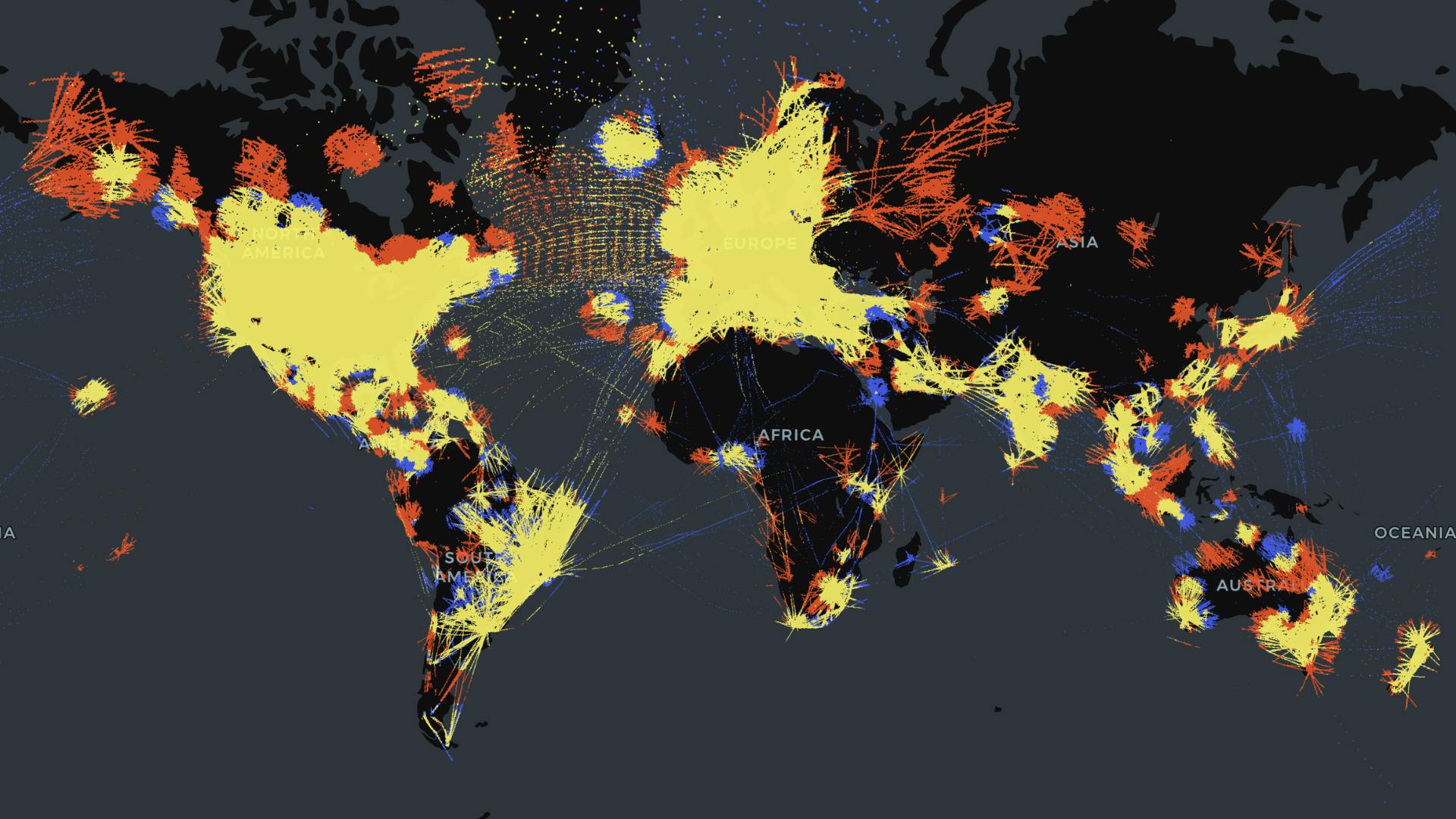
Wingbits coverage (blue) compared to Competitor (red)
Network Maturity and Geographic Expansion
The narrative around coverage has fundamentally changed. When you compare our footprint with established incumbents, we're no longer catching up in the EU, US, Brazil, and large portions of the Middle East and Turkey. We're competitive. In some regions, we're even better.
By the end of the year, our network reached 5,200 active stations across 120 countries, with coverage in places other networks do not reach, from remote islands to desert airstrips.
LATAM emerged as one of the fastest-scaling regions, achieving 6.2x growth from a relatively small base. With over 350 stations, Brazil specifically added meaningful coverage that validated network density in strategic markets opens doors that sparse global coverage cannot.
APAC growth campaigns launched at Korea Blockchain Week generated over 300 submissions focused on hardware deployment in strategically important areas. The MENA region maintained steady expansion, supported by localization efforts and regional community development.
The 99.6% retention rate across the network isn't just a metric. It's proof that community contributors who are rewarded fairly stay online, creating the stability enterprise customers require for operational decision-making.
Enterprise Validation Through Trials and Partnerships
Q4 highlighted the tangible value of our data to enterprise and research partners.
Drone Port Network chose Wingbits data to power their AI-driven airspace intelligence platform meerir, with the University of Montana beta testing the system for traffic visibility and deconfliction.
Vietnam National University selected Wingbits as their flight data partner for advancing AI-powered flight analysis. The collaboration with their Institute for Applied Artificial Intelligence brings together academic excellence with real-world aviation data.
Korean Air's R&D Center partnership represents the culmination of this shift. When one of the world's leading aerospace organizations collaborates with you to power next-generation research, it signals that you've crossed from "interesting startup" to "credible infrastructure provider."
Meanwhile, our acceptance into Hamburg's Sustainable Aero Lab accelerator provided direct access to aviation industry mentors and invaluable resources.
We're establishing ourselves more and more as a quality data provider within the aviation space. Every quarter, that positioning becomes stronger and more difficult for competitors to dismiss.
Abu Dhabi: Building in the Heart of MENA
December took us to Abu Dhabi, where we joined Hub71, Abu Dhabi's global tech ecosystem, positioning ourselves at the center of MENA's technology and innovation hub.
Our CEO Robin Wingårdh took the main stage at Solana Breakpoint in front of founders, builders, and innovators shaping the next era of the internet. As the first flight-tracking network built on Solana, the presentation crystallized where Wingbits fits in the broader infrastructure narrative and why aviation data matters for the next generation of applications.
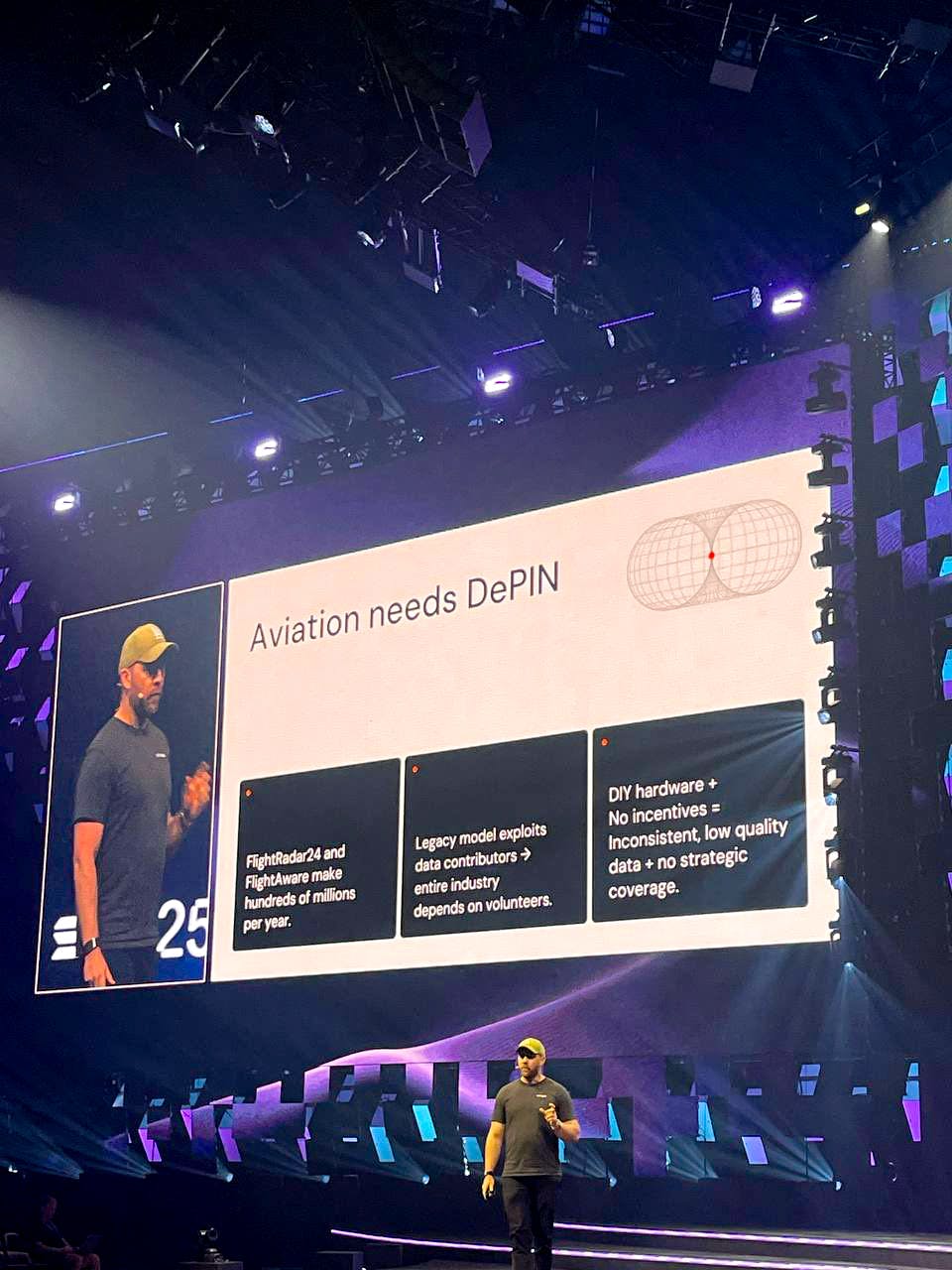
Robin on main stage, Solana Breakpoint
At the Global Blockchain Show 2025, Robin shared his personal experiences and what crypto has taught him about resilience. From professional golf to Web3 infrastructure, from multiple exits to building DePIN at scale, resilience isn't just a talking point for our co-founder. It's how Wingbits scaled from zero to 5,200+ stations in under two years, building through bear markets, scaling through uncertainty, and shipping real infrastructure while others waited.
Our new base in Abu Dhabi represents a strategic positioning in a region where aviation growth, government innovation programs, and technology adoption are converging.
Community First: The Early Reward Redemption Program
Most Web3 projects talk about community-first. We try to live and build by this principle.
We made the very difficult yet strategic decision to delay the TGE. While we understood this would be a major disappointment to many, we launched something unprecedented instead: an early reward redemption program that allowed community members to redeem some of their accumulated testnet rewards in USDC, without waiting for the official token launch.
As far as we can tell, we became the first and only Web3 company to execute a program of this kind. Community members who had helped build the early versions of our vision and network,could finally realize some reward for their efforts.
The response validated everything we believe about building community-first infrastructure. Rather than frustration over the delay, we mostly saw appreciation for transparency and action. The delay itself is an opportunity to strengthen our foundation, ensuring that when the token launches, it does so with proper foundations in place; supporting monthly revenue and the infrastructure maturity that enterprise partners expect from us.
The technical and commercial pieces are falling into place faster than anticipated. All signs point to 2026 being the year this foundation converges with a tokenized ecosystem we've been building toward.
Team Growth and Organizational Focus
To support network expansion and enterprise adoption, the Wingbits team grew over 25% this quarter, adding engineers, data specialists, marketing and aviation experts.
This team growth was focused on strengthening data reliability, operational resilience, and customer-facing capabilities, ensuring the network can meet the requirements of large aviation and aerospace organizations.
As the platform scales globally, the team structure now reflects a clear emphasis on high-quality and commercially scalable infrastructure, rather than short-term experimentation.
What 2026 Holds
As we enter 2026, the foundation is operational, pilot partners are converting to paying contracts , and the network’s technical capabilities have been proven at enterprise scale.
The pieces are in place. But we could not have done it without our community. Thank you for your support and daily contributions - you’re co-creating something truly remarkable that impacts millions of people's lives.
Here’s to another incredible year ahead. As always, please jump in to our Discord if you want to chat with the team directly, reflect on the past year, or share any questions and suggestions.
Otherwise, see you in 2026!

Company
Wingbits is a DePIN (Decentralized Physical Infrastructure Network) that rewards community members with $WINGS tokens for monitoring aircraft in real-time using specialized ADS-B hardware. The network aligns incentives to compensate participants based on the quality and quantity of flight tracking data they contribute, creating a more equitable alternative to traditional tracking systems. By incentivizing strategic hardware placement and reliable uptime, Wingbits is building the world's largest and most secure flight tracking network while disrupting an industry that has relied on unpaid volunteers for decades.