A World of Hexes
June 22, ‘23
Warning: Some of this information is now deprecated. You don’t need to purchase a SkyHex anymore, instead you can claim an area by deploying a live ADS-B receiver in it.
Just over a month ago, we introduced wingbits to the world — a web3 flight tracking platform that prioritizes the invaluable community of data providers. Although we just started, since we opened the platform to the community we have already collected an impressive 600 million GPS points from 20 receivers in just 4 weeks.
Needless to say, we are happy with the progress of our infrastructure so far. But we’re still far from achieving our main goal, global coverage.
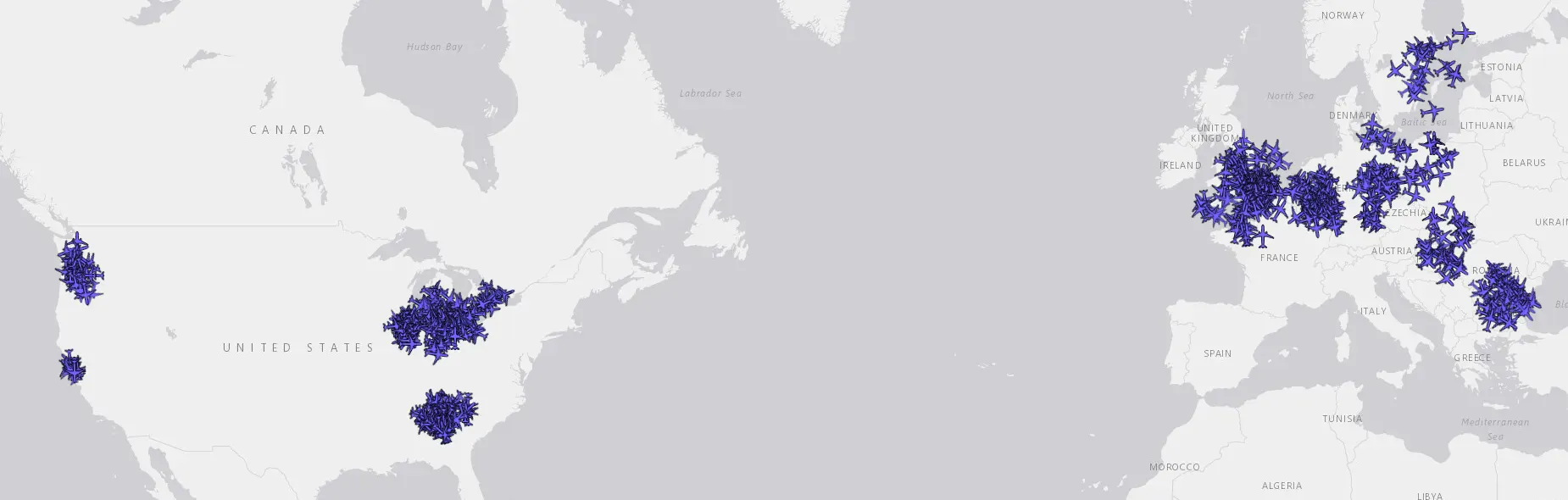
Let’s quickly examine what we can do to achieve that.
Centralized coverage
This is when an entity deploys all the infrastructure needed to create a network. The costs of doing this are so large that only large corporations can handle it, examples of such infrastructure include 5G networks or electric car chargers. Since we are trying to achieve global coverage, even with cheap hardware this would be extremely expensive.
Volunteer-driven coverage
This is the model employed by our competitors. Its main advantage is the significantly lower investment costs involved. However, its major drawback is the complete reliance on enthusiasts to provide network coverage. When ADSBExchange was purchased, they lost 10% of their network in the first few hours. Even in less dramatic scenarios, if a volunteer decides to relocate or switch off their receiver, the platform must wait for a new volunteer to step in and fill the gap. This situation can be problematic since volunteers lack the economic motivation to keep their receivers online or to increase the coverage of the network.
Decentralized coverage
We are big fans of decentralized infrastructure networks like Helium, which utilize economic incentives to increase the coverage of their Internet of Things network. Helium operates on the principle that hotspot owners are motivated to optimize their installations to cover the largest possible area to maximize the rewards. However, when an area becomes saturated with an excessive number of hotspots it leads to a reduction in rewards for all the hotspot owners.
In our case, area saturation would create an additional problem. A saturated area would result in an abundance of duplicated data, as an airplane can only be in a specific location at any given time. To illustrate this, let’s examine the deployment of Helium devices in a large city like San Francisco. In the screenshot below you can see the quantity of Helium devices deployed within the city.
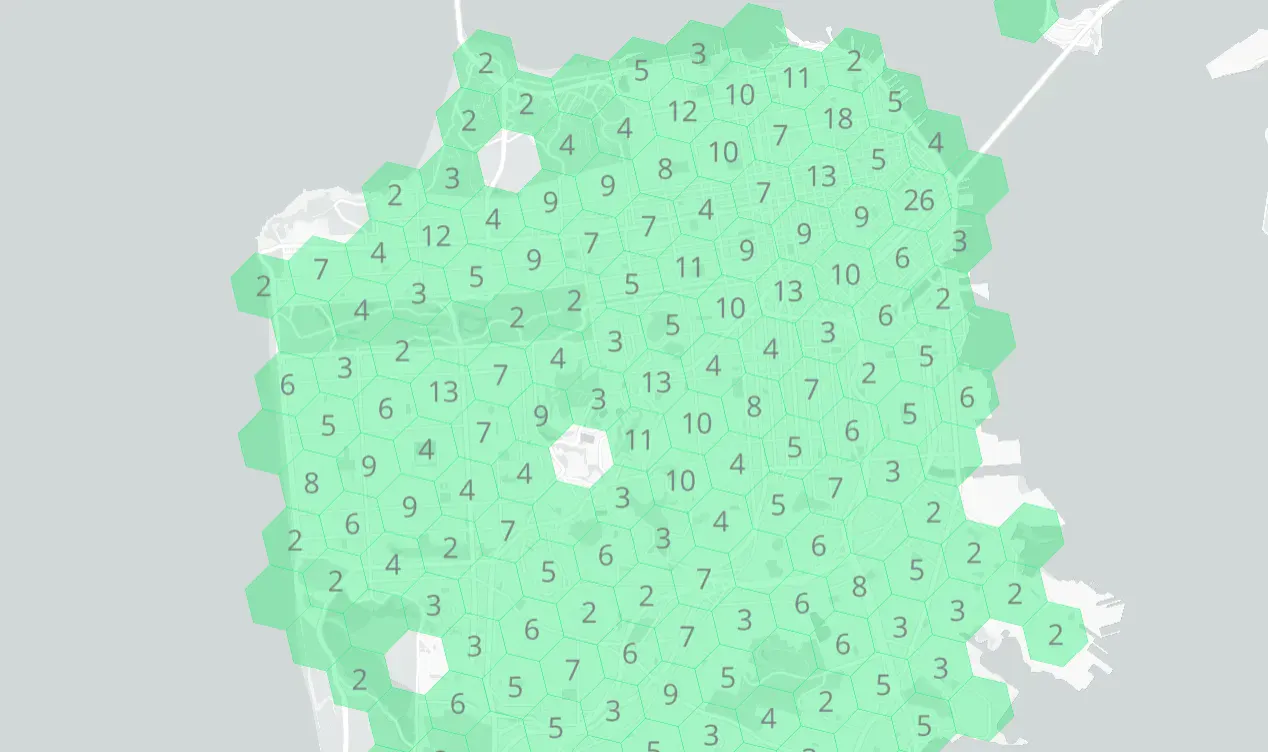
If those were wingbits receivers, the area would generate hundreds of copies of each airplane GPS point transmitted. This amount of duplication would only create additional costs for the project without offering any value. Most importantly, it would also generate very few rewards for the community as the limited data sales would have to be distributed among a larger number of individuals.
Regional ownership
We are now excited to unveil to the community one of the pillars of our strategy to achieve the largest coverage
We developed a system inspired by air rights, which grant landowners the privilege to construct above their land. Similarly, data providers will be able to own a piece of the sky above them. We called this system SkyHex.
How does it work?
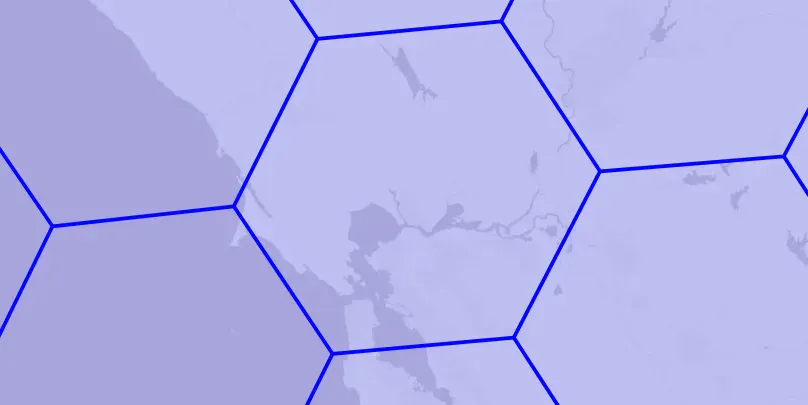
To accomplish this, we used Uber’s h3 hex system, which divides the entire globe into hexagons, each with its own unique identifier.
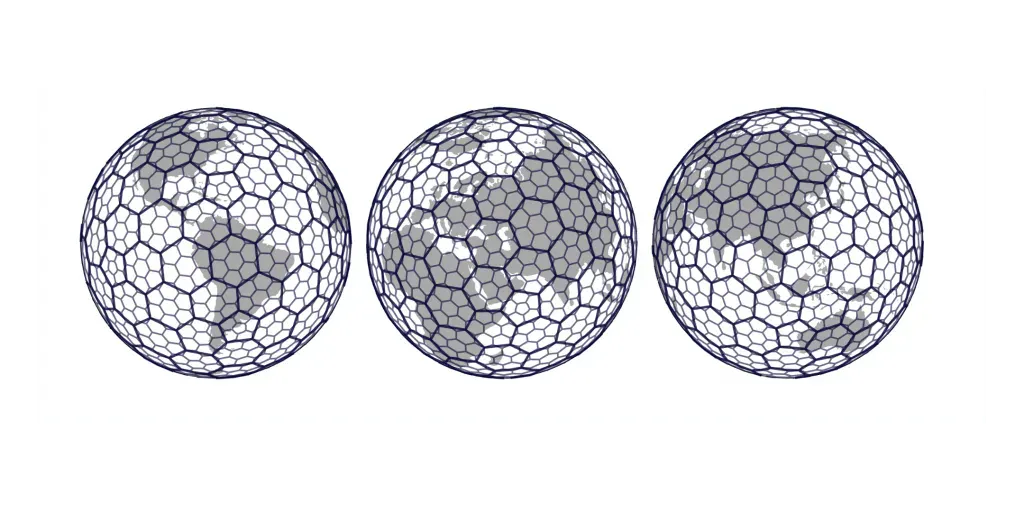
In our case, we applied this concept to create a system that grants receivers the exclusive right to monitor aircraft within specific sections of the sky and be rewarded for their data.
Each section will have enough space for 3 receivers to increase the possibility that at least one receiver will be available in case one of the data providers is going offline.
Applying this concept to our previous example of San Francisco, the revised map will be made of bigger hexagons that contain a maximum of 3 receivers per hexagon. As a result, the amount of duplicated data in this region would be reduced significantly, in some places a few hundred times less.
Details
- Every data provider will be able to purchase a SkyHex NFT that will give them the ownership of a certain sky hex. The data providers from the Alpha batch will have early access to buy their hexes before we open up the market.
- The SkyHex NFT will be auctionable and will have a very low floor price so that everyone in the world can afford it.
- Each receiver needs a SkyHex NFT to earn rewards. Sending data without owning the NFT is possible, but it won’t result in earning rewards.
- Ownership of multiple SkyHex NFTs is allowed, but only one copy of each NFT can be owned.
- Each SkyHex NFT corresponds to a specific h3 hexagon at resolution 3 on the map.
- Maximum supply: 123486
- In the event that a receiver with a SkyHex NFT fails to send data for 30 days, wingbits will reclaim the NFT and put it back on the market. Exceptions will be made for individuals experiencing technical issues.
- After using a SkyHex NFT for 30 days, it can be sold or transferred to another party.
- Rewards can be obtained for unclaimed hexes. However, if someone purchases a SkyHex NFT for a particular hex, they will receive all the rewards for the data provided in that hex.
- The rewards within a hex are distributed proportionally among the owners of that hex based on the amount of data they have contributed.
- Slow receivers will be penalized depending of their delay. This is to avoid really slow setups or people gaming the system. It only applies to delays over 1 minute and the rewards will be reduced by 25% for each minute of delay compared to the other hex owners.
Implications
This approach may seem counterproductive at first, as it sets a hard limit of 123486 devices on our network, with less than half of them being on land. However, there are several advantages to consider.
Firstly, implementing this system will significantly reduce the amount of duplicated data, resulting in more efficient use of resources. It will optimize coverage and ensure that we receive the fastest and most accurate data. This focus on data quality and efficiency is crucial for our success.
Additionally, this strategy narrows down the number of participants to a select few who have supported us since the early stages. We believe that having 3 receivers per hexagon is sufficient to ensure comprehensive coverage and network resilience. By keeping the number of providers as small as possible, we aim to maximize the earnings per device.
Due to the extensive coverage provided by SkyHex, early data providers can rest assured that their region will never become saturated, and they will likely have the opportunity to track numerous flights per day.
Furthermore, it’s important to note that rewards in this system are directly tied to the quantity and quality of uploaded telemetry data. This means that it’s not solely about delivering data quickly but also about providing the most comprehensive and detailed information possible.
In summary, the regional ownership system utilizing SkyHex NFTs offers us the largest coverage, the fastest and most granular data, and incentivizes the development team to prioritize data quality and sales rather than relying solely on new member acquisitions. This creates a win-win situation for both wingbits and its community.
What next?
We highly value our community, and as such, we will allow enough time for feedback on this plan. If everything goes well, we aim to have the market ready just in time before opening the Beta batch in the coming months.
Important: Keep in mind that all the information provided above is currently in the development stage and subject to changes based on testing and feedback from the community
Recommended articles
Get Ready for Takeoff
April 14, ‘25